


Commercial Access Control Beyond the Keycard: What Is New, and What Is Worth Adding
Access control has advanced in a few real ways over the last few years. Here is what is new, what it is good for, and how to tell which parts are worth it for your building.
Dallas Alarm Systems Team
What Has Changed, and What Has Not
Plenty of businesses still run on keys and swipe cards, and for a lot of buildings that is perfectly fine. The technology behind access control has advanced in a few real ways over the last few years, though, and some of those changes are worth knowing about before your next upgrade or a new project.
A few things have changed. The keycard is slowly giving way to the phone. More systems are managed online instead of from a computer in a back closet. And a few are getting smarter about when they open a door at all. None of this means what you have now is wrong. It means you have more choices than you did last time around, and some of them solve problems that keys and older cards never could.
At Dallas Alarm Systems, a good part of the commercial access control work we do is helping owners figure out which of these make sense for their building and which they can skip. What follows is a plain look at where things stand.
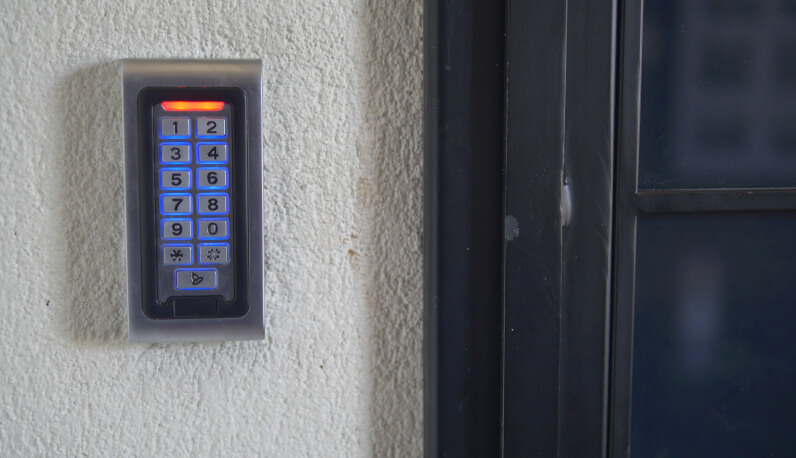
What a Modern Access Control System Is Made Of
- A controller, the part that decides whether a door unlocks
- A reader at each door that picks up the card, fob, or phone
- The credential, meaning whatever a person uses to get in
- The lock itself, usually an electric strike or a magnetic lock
- A request-to-exit sensor and a door contact, so the system knows when a door is opened and whether it closed again.
A call we make on every install:
From Keys and Old Cards to Smart Cards
Smart cards fix that. They use encrypted communication between the card and the reader, which makes them far harder to clone than the older low-frequency ones. To your staff they look and feel like the old cards, so nothing changes at the door except better protection behind it. For most new setups, they are a sensible place to start.
Mobile Access, When the Phone Becomes the Badge
There is a security side too. A phone stays locked behind a passcode or a fingerprint and rarely gets left lying around, unlike a card in an open drawer. Most businesses still keep a few spare cards for visitors, but for regular staff the phone is becoming the normal way in.
Touchless Entry, and Why It Caught On
Cloud-Managed or On-Premise: Managing Access From Anywhere, or Keeping It In-House
This matters most when you have more than one location. One mistake we see often with several sites is a different access control system at each location, which leaves no single place to check what happened when something goes wrong. Cloud access brings them under one login. If you run more than one site around Dallas, one person can manage every door and pull reports from anywhere, which is usually where the cloud makes the most sense.
Putting the Doors on a Schedule
Why Access Decisions Are Getting Smarter
The newest change is in how the system decides. An older system really asks one thing, does this badge work. Some of the larger enterprise access platforms are starting to borrow ideas from an IT security approach called zero-trust, and weigh a bit more before they open, like whether the request matches the person’s role, the location, the time, or whether a second form of authentication is needed. In plain terms, the same card that opens the front door on a Tuesday morning might be held or sent for a second check at the server room door at two in the morning. This is still mostly an enterprise feature rather than something every new system does, but it is the direction the higher end is heading.
This is also where access control stops working on its own. Tied into your alarm system and security cameras, a door opened after hours can set off the alarm and bring up the matching video at the same time, so you are not left guessing from a line in a log.
Thinking About Updating Your Access Control?
If you are weighing whether to move off keys, add mobile access, or bring a few locations onto one system, we are happy to talk it through. Dallas Alarm Systems works with businesses across Dallas, Fort Worth, Frisco, Richardson, and the wider metro, and we can walk your doors with you and show you which ones are worth upgrading now, which can wait, and where spending would not make much difference. See the areas we cover across the metro,


