


How Can You Secure a Construction Site Without Power or Internet?
Dallas Alarm Systems Team
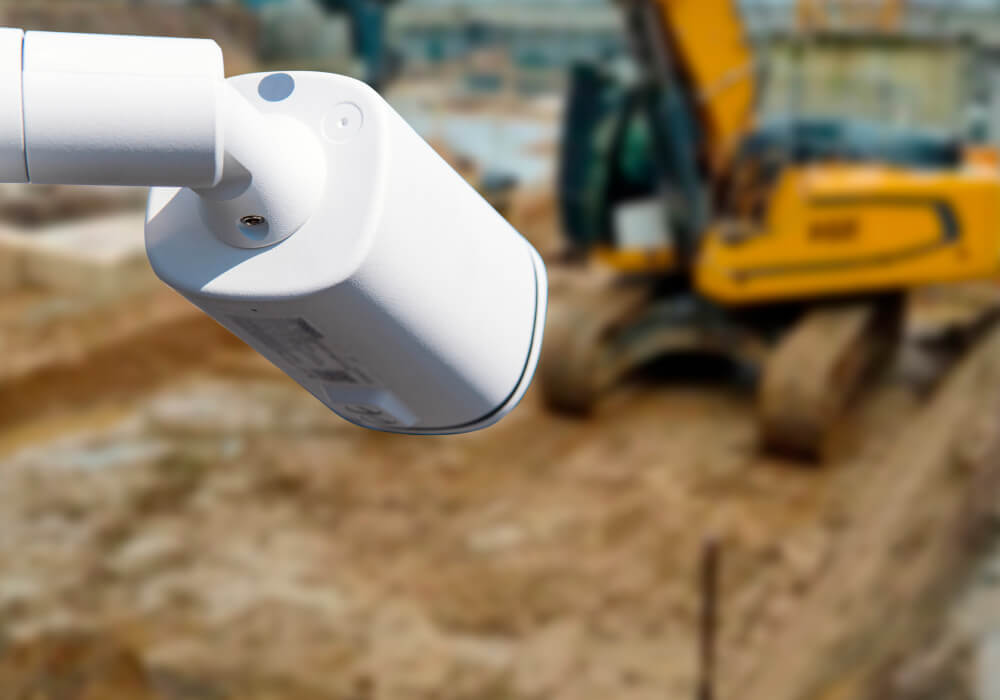
An active construction site can have a surprising amount of value sitting in exposed areas. Copper, tools, appliances, fixtures and fuel may arrive long before the building can be secured properly. The footprint changes every few weeks, and different crews come and go through the same gate. The site does not yet have the permanent power, the internet service or the finished walls that a normal security system is built around.
Equipment that works here has to bring its own power, its own connection, and a way to be moved when the site changes around it. That narrows the options, and it also changes what you should expect from it.
Why a Building Under Construction Cannot Use a Normal Alarm System
A security system for a finished building assumes walls to mount to, doors that close and latch, a power circuit and a network connection. During the early stages of construction, some or all of those may still be unavailable, and each missing piece changes what can be installed.
- No permanent power: temporary power is sized for tools and lighting, it goes down when a pole is moved, and a security panel should not be sharing a circuit that trades switch off at the end of the day.
- No internet service: the permanent connection may not be active while tools, equipment and building materials are already being stored on the property.
- A layout that keeps moving: the gate, the trailer, the lay-down yard and the stored material all change position as the build progresses, so anything mounted in a fixed spot covers the wrong ground within weeks.
- Openings everywhere: a building in framing has no secured perimeter at all, and a fenced site has a gate that opens every morning for deliveries.
What Is Most Exposed at Each Stage of Construction
Theft on a jobsite tends to follow the construction schedule, because what is sitting on the property changes from one phase to the next, and so does how exposed it is.
- Site work and early grading: fuel, generators, temporary power equipment, and anything on wheels that can be driven or towed off the property.
- Rough-in: copper wire and pipe, spools and offcuts, and the compressors, saws and cordless tools that live in gang boxes overnight.
- Finish-out: appliances, fixtures, cabinetry, HVAC components and anything else installed but not yet under a lock the owner controls.
- The whole way through: storage containers and job boxes, which are targeted because the contents are consolidated and the container sits away from the building where nobody is working.
Two things decide how much of that is actually at risk: when the site is empty, and how easy it is to get onto it. Overnight and weekend periods carry greater exposure because fewer people are present to question a vehicle or notice activity around stored materials. Not every unauthorized entry involves a forced gate or a cut fence. Shared codes, copied keys and entrances left open for deliveries also need to be considered.
What Actually Runs Without Permanent Power or Internet
Temporary jobsite equipment gets around the utility problem by carrying its own power and its own connection. These are the parts that do the work on a site with neither.
- Solar and battery-powered cameras: the solar panel charges a battery that keeps the unit operating after dark. How long it can continue through poor weather depends on the battery reserve, equipment load and available sunlight. These mount on a pole, a container, a fence line or a trailer mast, and they move when the site moves.
- Cellular reporting: the unit sends alerts and video over an LTE connection rather than a building network, which is what makes it independent of the construction schedule.
- Battery powered wireless sensors: door contacts and motion sensors on a job trailer, a container or a temporary office give you a detection point where there is no wiring at all.
- Temporary mounting and relocation: fence posts, ballasted stands, container corners and mast trailers all exist so the equipment can be repositioned rather than reinstalled.
What Happens to Recorded Video During a Cellular Outage
Where the video is stored is a separate question. Some temporary cameras store video locally and upload events over cellular, while others depend more heavily on a continuous connection. Before the equipment is installed, confirm what continues recording during a cellular outage, how much footage can be stored on the unit, and what happens when the connection returns.
Solar, Battery and Cellular Limits to Plan For
Temporary equipment has real limits, and most of them only become obvious once the unit is installed. These are the ones worth planning around before a unit is mounted and left there.
- Solar output: falls off as daylight shortens and as new structure shades a panel that used to sit in full sun, and a rising building changes that without anyone noticing.
- Battery reserve: measured in days of poor charging rather than weeks, so a panel that has been shaded needs to be moved or supplemented rather than waited out.
- Cellular signal: depends on the conditions where the camera is mounted rather than at the gate where the phones work, so the mounting position is worth confirming before the unit is left there.
Coverage has to move with the site. Material moves when the slab goes down, sight lines that worked across open ground get blocked as the shell rises, and a gate that relocates for finish deliveries leaves a camera watching an entrance nobody uses. Walking the site at each phase change is usually enough to catch it.
Check the cellular signal at the actual mounting point rather than at the gate, and look at what will be standing between the panel and the sun once the building is two floors taller.
What Monitoring Can Do on a Site With Nobody On It
An alarm on an open construction site behaves differently from an alarm in a closed building. There is no locked perimeter to breach, so everything depends on what happens after something is detected in the middle of the night.
Detection on its own creates a great deal of noise. Wind moves debris, animals cross the property, and headlights sweep the site from the road. Camera analytics help reduce those nuisance alerts by distinguishing people and vehicles from many common sources of movement. Events that match the system rules can then be sent to an operator for review.
After an Alert: What the Operator Actually Does
On an unmanned site, the alert is only the beginning. What the operator does next is what decides the outcome. Where the service includes live intervention, the sequence usually runs like this.
- The operator opens the camera and looks at the site before deciding anything
- Ordinary activity is dismissed, such as a driver arriving early for a delivery
- If the activity is not ordinary, the operator may issue a verbal warning through a speaker
- The operator then follows the response instructions agreed for that site, which can include calling police
- Verified video gives the monitoring center more to report than a numbered alarm zone
Some monitoring plans also include scheduled camera checks between alarm events. A siren by itself accomplishes very little on a site with no neighbors within earshot, which is why the useful part is having someone confirm what is happening.
Give the Operator Current Site Instructions
An operator can only act on the instructions on file, and on a construction project those instructions date quickly. The contact list should make the following clear.
- Who can confirm an expected arrival: a superintendent or project manager the operator can reach at two in the morning to verify a late crew or an early delivery.
- Who can authorize police response: the operator should not have to guess who has that call on a site with several companies working.
- Who to call for a site problem: equipment moved, a gate left open or a container unlocked needs a person, not just a logged event.
Update that list when the superintendent changes or the project enters a new phase.
Wiring the Permanent System While the Walls Are Still Open
The temporary equipment leaves when the building is finished. The permanent security system is decided months earlier, during rough-in, and this is the part most often left too late.
Low-voltage work needs to be coordinated with the construction schedule, because pathways, cable and device locations become harder to change as the walls close. Pathways go in first, meaning conduit, sleeves and support hardware. Cable is pulled next, before insulation goes in, so it is not crushed or buried. Device boxes are set before drywall closes the walls, because that is what puts a card reader, a keypad or a camera exactly where it belongs instead of where there happened to be room afterward.
- Decide device locations before the walls close: cameras, readers, keypads, contacts and the head-end location all need to be on a drawing while the framing is still open.
- Give the head-end real space: the equipment room needs room, power and cooling, not a leftover closet.
- Coordinate low-voltage and electrical pathways: maintain the separation required for the cable, pathway and electrical load, and plan necessary crossings before either trade begins its run.
- Pull spare capacity: conduit fills up, and adding a camera later costs far less when the pathway is already in place.
Doing this after drywall means cutting, fishing, patching and painting, and none of that work improves the system, it only repairs walls that did not need to be opened.
One problem that appears on new construction is a design drawing that no longer matches the building taking shape on site. Framing gets adjusted during the job, doors move, and a reader location that made sense on paper ends up behind a column. Walking the shell before insulation goes in catches that while the location is still easier and less expensive to correct.
What Tends to Go Wrong on a Well-Run Site
Most of these are ordinary gaps. The decision was reasonable when it was made, and the site moved on without it.
- Coverage aimed at the wrong thing: the camera watches the job trailer while the lay-down yard, where the material is stacked, sits in the dark.
- A gate that is only secure at night: it stands open all day for deliveries, and nobody records who came in or what they brought out.
- No serial number record: a recovered tool cannot be proven to be yours, which also weakens an insurance claim.
- Access that no longer restricts anyone: the gate code or padlock key has been shared across so many subs that it has stopped meaning anything.
- Equipment left where it was first installed: nobody moved the camera after the site plan changed, so it now covers ground that is already finished.
Building in the Dallas Area?
Dallas Alarm Systems works on commercial projects across Dallas, both during the build and on the permanent security system that stays in the finished building. If the walls are still open, that is the right time to talk about where the devices go.
Frequently Asked Questions About Construction Site Security
Who is responsible for security on a jobsite, the general contractor or the subcontractors?
It depends on the contract documents rather than on convention. Responsibility may sit with the owner, general contractor, construction manager or individual subcontractors, depending on the contracts and insurance arrangements. The important part is to put responsibility for the site, stored materials and each contractor’s equipment in writing, particularly for material that has been delivered but not yet installed.
What happens to the temporary equipment when the building is finished?
Temporary units are usually rented or relocated to the next project rather than left behind, because they are built to be moved and are not the right equipment for a finished building. The permanent system is a separate scope, which is why the two should be planned together. Deciding on the permanent system early also tells you how long the temporary coverage needs to run.
Does builder’s risk insurance require security on the site?
Requirements vary by carrier and by policy, so ask your agent rather than working from a general answer. Many policies do ask what protections are in place, and some have conditions around theft claims for material stored on site. Being able to describe your fencing, lighting, access control and monitoring accurately is useful in that conversation either way.


